

The early 2000s were an incredible time for audiophiles. Headphone technologies and how we listen to music underwent countless significant changes that still influence our listening experiences today. In fact, most of today’s “new” technologies would never have existed were it not for the massive steps the industry went through between 2000 and 2010.
I was privileged enough to see those changes happen before my eyes. As a college student at the time, I couldn’t always afford the latest and greatest in headphone technology. Still, I was so passionate that I studied those incredible new devices every waking minute.
In this post, I’d like to take a nostalgic journey and look at some of the most influential headphones of that decade and how they changed the sound landscape forever.

Trends and Technologies
Headphones have existed since the 1890s and were used by switchboard operators and radio controllers during both world wars. The following 100 years saw them develop into entertainment devices, mainly through the significant efforts of John Koss and the development of Sony’s Walkman.
But headphones weren’t the only things that changed. The 90s saw people switching from portable cassette players to portable CD players, forever changing how we listen to music. Digital music was still limited to CDs, MiniDiscs (MD), recordable CDs (CD-R), and DVD-Audio discs. MP3s became popular during the 90s, but you had to use a computer with a sound card to listen to them.
But the glorious 2000s changed everything.
Many people believe that the launch of the iPod in 2001 was the first significant step forward. It made portable music more convenient, compact, and stylish than ever before. The iPod also offered a substantial improvement in sound quality, not necessarily over CDs, but definitely over cassette tapes.
Many competing brands began to emerge. Sony re-released the Walkman as a digital music player, Creative Labs released its own Zen, Microsoft entered the market with the Zune, and a few other brands like iRiver and Meizu also tried their hands at it.
This started a revolution. Portable music suddenly made sense. You no longer had to carry a large, sensitive CD player because MP3 players could fit in your pocket. There was no need for a pouch full of CDs to change the music you’re listening to—MP3 players could store thousands of songs.
With that change came the demand for better headphones. The most “portable” earphones didn’t have high quality and were extremely uncomfortable (remember those old earphones covered with a thin sponge that were all the rage in the 80s and 90s?). High-quality earphones were quite large and heavy, making them inconvenient for traveling.
High-quality portable music players demanded high-quality portable headphones. And, oh my, did the 2000s deliver! Some of the most significant advancements of the decade include in-ear monitors (IEMs), improvements in sound quality, a focus on comfort, and noise cancellation.
In-Ear Monitors (IEMs)
IEMs have long been used by performers while on stage. They were low-quality wired devices focused more on function than performance. Stevie Wonder was one of the first performers to use a semi-wireless monitor solution, but it wasn’t an in-ear monitor.
In the late 1990s, engineer Jerry Harvey toured with legendary rock band Van Halen as a member of their sound team. Drummer Alex Van Halen told Jerry he had trouble communicating with the other band members during performances because the sound was too loud on stage. This led Jerry Harvey to develop custom stereo in-ear monitors for the band in the early 2000s.
This was a drastic step forward, and the rise of Bluetooth technology, earbuds, and improved noise filtering led to great strides in making wireless in-ear monitors the powerful devices they are today.
Sound Quality Improvements
The first digital audio files (like MP3s) were very lossy. There was often a clear difference between CD-quality sound and the MP3s you could easily (if not legally) find online.
With the launch of the iPod, many companies entered the marketplace with their own portable MP3 players that were often more affordable and, in some cases, more convenient. Many off-brand models allowed you to upload any music you had without fiddling with iTunes or other proprietary software.
This competition pushed Apple to keep improving the iPod’s sound quality, which also meant improving the quality of their earphones, which they’ve been consistently doing since then.
MP3 is a lossy standard, even at its highest settings, which means many people weren’t happy with the sound quality despite all the strides made. That’s why 2001 saw the first release of FLAC—the Fully Lossless Audio Codec, which promised perfectly portable digital audio with lossless compression.
With these changes, headphone manufacturers also had to do what they could to improve their sound quality, creating many new headphones and earphones with higher quality and better noise filtering than ever before.
Enhanced Comfort and Fit
As portable music exploded onto the scene, people started listening to their music more often. They would use their iPods at home, in their cars, on public transport, and even at the office. Headphones that weren’t comfortable to wear for extended periods were quickly replaced with more comfortable models, so manufacturers had to find ways to improve their comfort and fit.
Noise Cancellation
All-day wear also meant people were often listening to music in loud environments. Previously, noise cancelation was mainly reserved for high-end and studio-class headphones. Still, the early 2000s saw many manufacturers finding creative ways to include noise filtering (and, eventually, noise cancelation) in their devices.
Earbuds
To some extent, Apple was responsible for the rise of earbuds in the early 2000s since the iPod shipped with a high-quality set. They were great for their time, but they were hardly the best.
Sennheiser MX500

By today’s standards, many people would sneer at the Sennheiser MX500, but it was an exceptional set of earbuds back in 2001. It was so influential that it became the blueprint for millions of other earbud brands and models.
It had a frequency response of 18-22,000 Hz. It was an average set of earphones by all standards, with no fancy features except in-wire volume controls. But its sound quality was incredibly good for the time. Bass and treble were powerful enough to offer well-rounded, full sound in a world of tinny-sounding earphones. It was Sennheiser, after all.
The MX500 was affordable for most, and it came with a feature many other manufacturers could have benefited from: a wind-up carry case.
Sennheiser’s MX500 was an incredible product for its time, so much so that it still has a loyal following and an active second-hand market more than twenty years later.
Sony MDR-E888

Sony’s MDR-E888 was one of the MX500’s leading competitors. People often compared the two, and fans were quite divided on which model was better.
In my opinion, the MDR-E888 won on sound quality. They weren’t audiophile earphones—back then, earbuds didn’t even nearly make that cut. But they had stronger bass and an even fuller sound than the MX500, making them an absolute treat. They had a frequency response of 8 to 27,000 Hz, which was already an improvement over the Sennheiser model.
One problem that plagued the E888 was that it wasn’t very comfortable. Many people found the earbuds were either too big or too small. Even if they fit, the thin foam covers that came with the buds weren’t good enough to keep you comfortable for long periods.
Despite that, the sound quality made these earbuds an excellent buy at the time.
Audio-Technica ATH-EC7

The Audio-Technica ATH-EC7 had a form-fitting, adjustable ear clip that held the drivers in place just inside your ears and could be positioned to drive the music straight into your ear canals. The sound clip was quite revolutionary at the time since it enabled users to adjust the earphones to most ear types.
The sound quality was excellent, considering they didn’t block outside noise as well as many other earbuds did. Perhaps slightly lacking in the bass department, the midrange was terrific and the sound signature was pretty tight, making them great for less bass-dependent music. It’s worth mentioning that it offered better bass than its primary competitor, the A8.
Unfortunately, the ATH-EC7 didn’t get nearly as much credit as it deserved. Shortly after its launch, the market was flooded with authentic-looking bootleg versions with inferior sound quality. They looked so real that many people never realized they owned fakes, and they criticized the EC7 based on their bad experiences.
B&O A8

Bang & Olufsen (B&O) is a Danish company focusing on high-end consumer electronics, so quality is undeniable. This made the B&O A8 slightly more expensive than some of the other models, but it wasn’t the most expensive set, and the price was worth it.
Like the ATH-EC7, this one had an ear clip that hooked over the ears, but it wasn’t as adjustable. However, few people noticed because of how well the A8 was designed since it had little hinges to position the buds to pump your music directly into your ear canals.
The sound quality was different from the others. It was less “fuzzy” and more well-balanced, meaning it sounded great on a broader range of musical styles than others. It was lacking in bass, but high frequencies were delivered with clarity and precision, so the sound was much fuller overall. It had a large soundstage, so it almost felt like you were listening to a live performance.
Its main caveat was its lack of adjustability. Though the combination of anodized aluminum and hard rubber made it quite comfortable, it didn’t fit all ears equally well.
IEMs
People often ask me about the difference between IEMs and earbuds. They are pretty similar, but IEMs offer better noise isolation. They are also much smaller because they use balanced armature (BA) drivers instead of dynamic drivers. These are much smaller, weigh less, and offer better high-frequency extension.
In simpler terms, earbuds are the casual, everyday headphones you might use for listening to music on the go, while in-ear monitors are like the high-performance, professional-grade version for people who want top-notch sound quality and isolation, including musicians. The early 2000s showed incredible advancements in IEM technology.
Etymotic ER4P/ER4S

The Etymotic ER4 series quickly became lifestyle devices for many audiophiles, especially the ER4P and ER4S. They had an incredible sound and much stronger bass than regular earbuds, making them an instant hit. They came with various ear tips that ensured a better fit and good noise isolation.
The ER4S offered a detailed, almost clinical sound that appealed to many. It’s hard to describe except that it felt like you were hearing music as the bands or artists intended it to sound. It wasn’t ideal for portable music players, though, since it was designed to work with amplified devices, so you had to add an amplifier if you wanted to use it properly with portable players.
The ER4P was essentially the same as the 4S, but with a few differences. People considered it the “bass-boosted” version, which wasn’t really accurate. It had more prominent bass, but it achieved that by changing the impedance, resulting in the higher frequencies tilting down slightly in favor of the lower frequencies. The result was a much deeper and warmer sound.
The lower impedance also meant that the ER4P worked well with portable music players and early smartphones since it didn’t need an amplifier.
They appealed to different users, but both were exceptionally popular. Some people still use them today.
Shure E4c/E5c

Shure marketed the E4c and E5c as replacement earphones for iPod users, and the fact that they were IEMs made them popular choices due to their improved comfort and sound quality.
The E4c offered a warm listening experience with powerful bass. Its exceptional noise isolation capabilities minimize external distractions and offer an immersive listening experience. This made them ideal for tranquil settings or focused work sessions where the outside world fades away, leaving you to dive into your music or media with unparalleled clarity.
Its sound profile was well-balanced. It had clear mids, detailed highs, and accurate bass, so it was an instant hit with many users. But it had some downsides, like the price and the fact that they were pretty tricky to fit correctly. Many people had to try different ear tips for good results and a proper fit.
The E5c was a significant upgrade since it had two separate drivers: a woofer and a tweeter. The dual-driver design led to a fuller and richer sound with even more powerful bass than the E4c. Audiophiles online are still raving about the incredible sound quality they got from these earphones, even when listening to lossy MP3s.
The E5c was aimed at users who wanted the absolute best in audio fidelity, and it definitely delivered! It sounded even better with an amplifier thrown into the mix, but it wasn’t absolutely essential.
Westone UM2
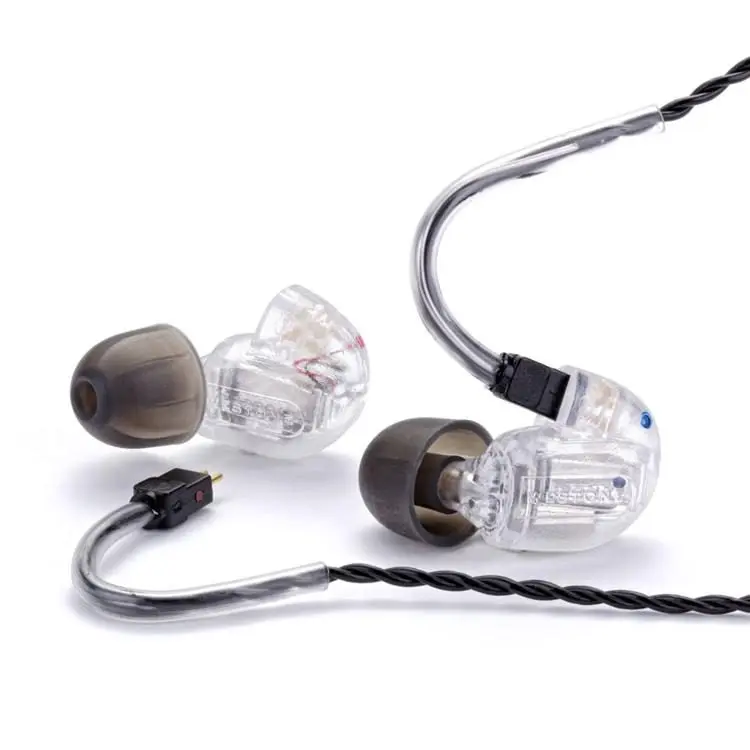
The Westone UM2’s target market was musicians. It offered unbelievably high sound quality and excellent noise isolation to help stage performers hear one another and their instruments more clearly. It was a professional device, but its pricing was much lower than its competitors, making it a popular choice.
That didn’t stop people from using it for general listening. It was an instant hit. In fact, listening to music over the UM2 was almost like rediscovering your music since you could hear the fine details so much more clearly.
The fact that it was a professional device used on stage and in studios meant that it offered a pure audio approach. The goal was not to tamper with the frequency range too much and to provide the sound in an almost clinical way. Of course, that approach appeals to most audiophiles as well.
Ultimate Ears Super.fi 5 Pro

The Super.fi 5 Pro was one of the UM2’s significant competitors. It offered similar sound quality and performance with exceptional noise isolation from the interchangeable ear tips.
This device was also mainly intended for musicians, but audiophiles picked it up in droves. The sound quality was excellent, while the earphones were lighter and more comfortable than many of the other options.
The sound was excellent but different. It wasn’t as warm and “full” as many other brands, even feeling slightly shallow at times (especially in songs with plenty of bass). But the quality was still so good that you never really noticed the lack of warmth unless you immediately switched to a different IEM.
Headphones
And now we come to the ultimate choice for audiophiles worldwide. Don’t get me wrong—earbuds and IEMs have reached a point of excellence where few people notice a sound difference. However, the portability aspect means that manufacturers must sacrifice some sound quality, which is not the case with headphones.
Though headphones have been improving in quality for decades, the early 2000s saw some impressive strides in headphone technology and a few models that are still impressive by today’s standards.
Sennheiser HD 600/650

Sennheiser’s HD 600 and 650 were the cause of many debates online. They were considered true audiophile headphones, but people were divided over which model offered the best sound.
The HD 600 was excellent. It offered pure sound quality that was better than most competitors at the time. The headphones were also quite comfortable, though not ideal for extended listening times.
The HD 650 was a step up in terms of quality, and it fixed many of the complaints people had with the 600. Most notably, the 650 had much fuller bass and wasn’t as shrill at high volumes. This means it had a fuller and warmer sound signature than the 600.
In this case, it all came down to taste. Some people loved the 600 because the sound was so pure. Others found the sound signature a bit lacking and preferred the 650’s warmer sound. However, nobody argues that these were the audiophile headphones to have back in the day.
AKG K701
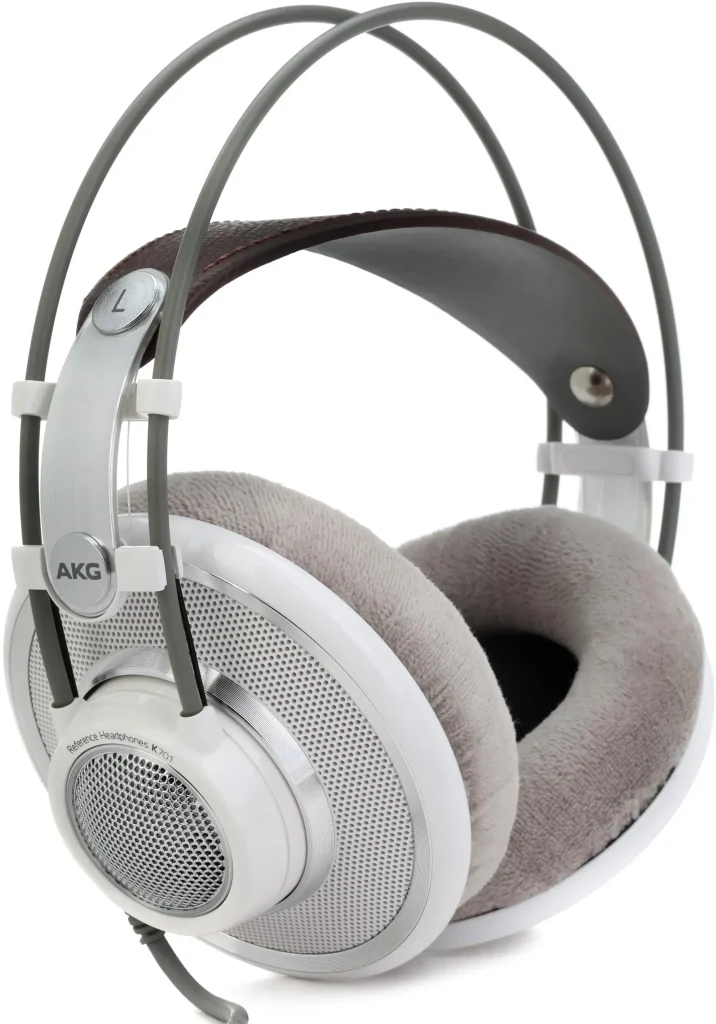
One thing stands out whenever people mention the K701: the soundstage.
The K701 has many things going for it: exceptional sound quality, decent price range, suitability for studio mixing, and excellent frequency range (10 to 39,800 Hz). But its soundstage makes it stand out from the competition, and the open-back design helps with that. These headphones are an audiophile’s dream (and, yes, you can still buy them new—that’s how great they are).
Another interesting fact is how long it lasts. Some people have owned their K701s for over ten years, and they’re still working well. That’s partly due to the flat-wire voice coils, which means they can resist fatigue much better.
Beyerdynamic DT 880
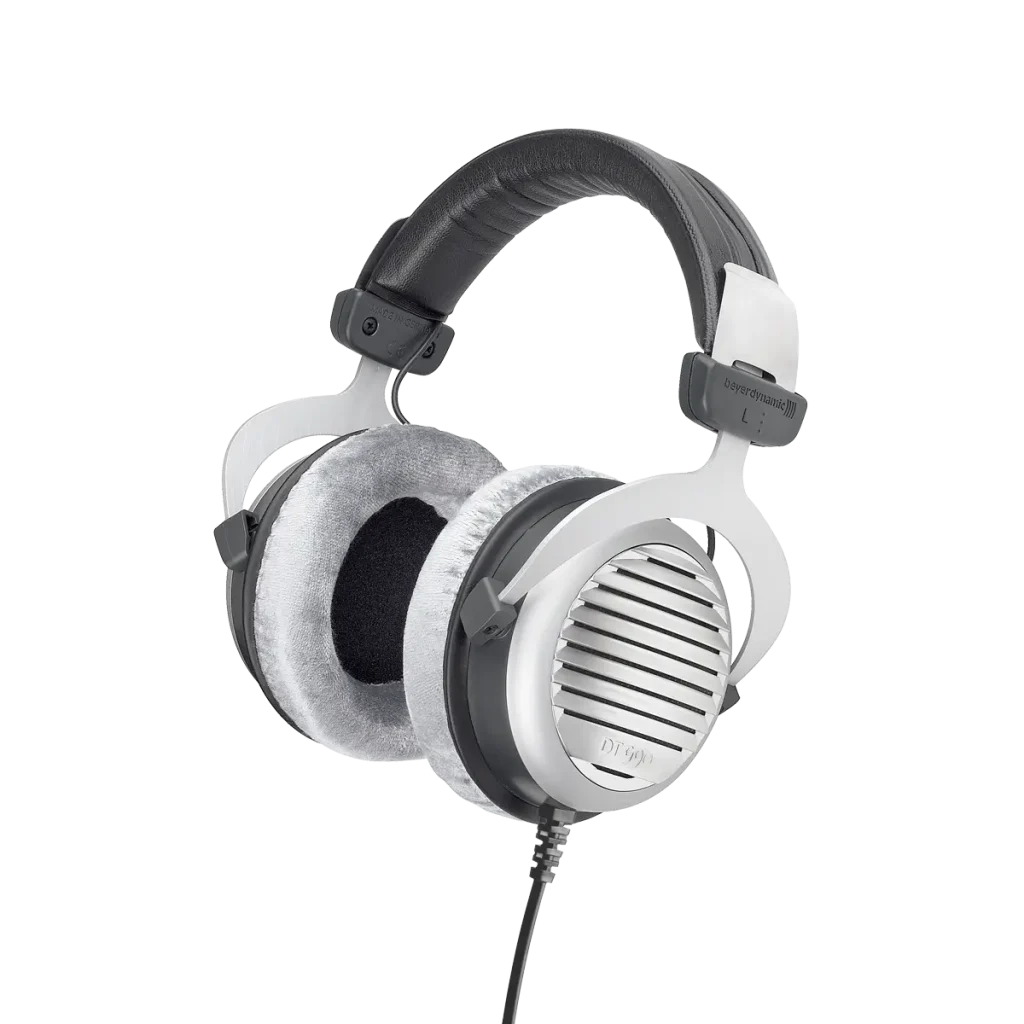
It shouldn’t be necessary to explain why Beyerdynamic made it onto a list of iconic headphones—the brand itself is iconic by now. But the DT 880 is widely regarded as an excellent device, even by those who don’t really like the brand.
Marketed as hi-fi headphones with almost studio-level quality, the DT 880 delivers as expected. It’s excellent for critical listening since it has a solid mid-range with strong bass and treble. The semi-open design contributes to a great virtual soundstage, which also means the headphones aren’t great at blocking ambient noise.
One of the things I love about the DT 880 is how well it works without an amp. It sounds excellent and is more than loud enough even when plugged directly into a computer. Sure, there are better options out there, but for pure listening pleasure without expensive add-ons like amps, the DT 880 is hard to beat.
Grado SR80

The Grado SR80 was a bit of a deceptive device. Its build quality felt a bit flimsy and cheaper than the competition, which caused many people to look elsewhere. But those who gave it a chance were delighted to find the pure sound excellence it offered.
With a wide, open soundstage, the SR80 offered a neutral listening experience far beyond many of its competitors. It reproduced instruments and vocals with exceptional clarity and could accurately achieve fine details in high-res, lossless audio. Because they were for neutral listening, they didn’t over-emphasize the bass, which was a slight disadvantage for some.
Because they were open headphones, ambient noise was a problem. But nothing beats the feeling of sitting in a dark, quiet room with your SR80s plugged into the hi-fi, listening to your favorite bands how they’re meant to be heard.
Audio-Technica ATH-A900

The ATH-A900 was a set of closed-back headphones explicitly made for audiophiles by one of the biggest names in the industry. The most prominent complaint people had was its size—these headphones were huge! But that doesn’t mean they were uncomfortable. They actually sat quite well once you adjusted the set correctly.
But the size didn’t detract from the listening experience. The large aperture 53mm drivers and double air dampening system offered an almost unparalleled rush of audio pleasure. The wide range means it fits just about any genre of music. I especially loved how they sounded with rock and folk music, but even dubstep and other bass-intensive genres were represented clearly.
Even though closed-back headphones tend to lack the soundstage that open-back models have, this set performed exceptionally well in that department. By all standards, if you could cope with the size and weight, the ATH-A900 was an exceptional set of headphones that didn’t disappoint.
Bose QuietComfort 2/3

Bose’s QuietComfort 2 and 3 were different from many competing models. They were closed-back headphones that were also capable of taking calls, optimized for iPhones. These headphones were also designed to be more portable than many others without sacrificing sound quality.
In fact, the sound quality of both models is excellent. They were some of the first to use Bose’s proprietary Acoustic Noise Cancelling technology so that you could listen to music during your commute without much outside interference. Sure, that doesn’t sound like much today, but it was groundbreaking in the early 2000s.
The headphones also featured active equalization, which meant they automatically adjusted the sound signature to match the type of music you were listening to. This worked quite well, accentuating the bass when needed but without overdoing it on songs that required less bass.
Though it wasn’t necessarily the best set of audiophile headphones, its sound was still excellent, and the added noise cancellation and improved comfort made these headphones perfect for general, high-quality listening.
Conclusion
Headphone technology has matured so much over the last two decades. You can walk into almost any store and pick up a pair of reasonably cheap Bluetooth earphones that might offer better sound quality than many on this list. But those earphones wouldn’t have existed (or been so affordable) if it hadn’t been for the great strides made in the early 2000s.
The increased focus on portability and noise reduction, while sacrificing as little sound quality as possible, started over a decade ago. No modern headphones would be the same without that revolution. The next time you put on your headphones or earbuds, take a step back and appreciate the groundbreaking work that brought you this incredible experience.